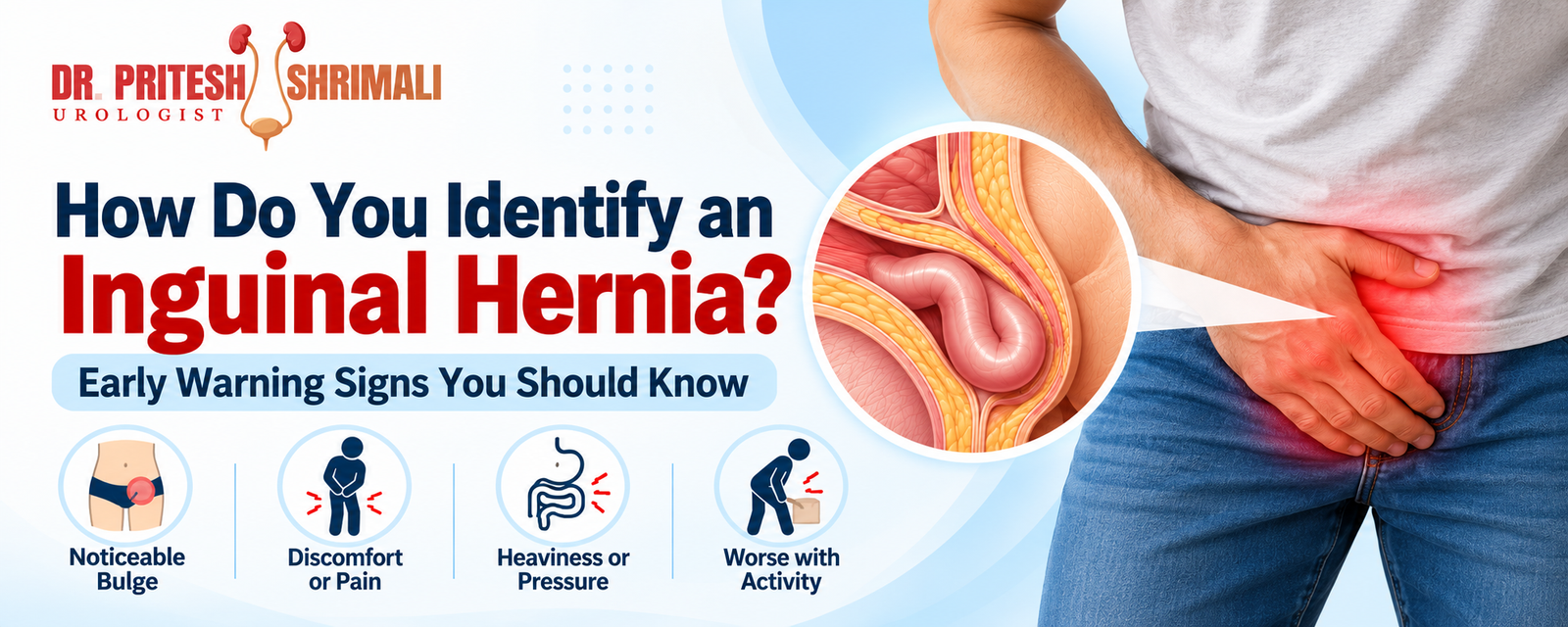
A small bulge in the groin, discomfort while coughing, or a feeling of heaviness in the lower abdomen may seem like minor problems. However, these can be early signs of an inguinal hernia. Recognising Inguinal Hernia Symptoms early can help you seek medical evaluation and understand whether treatment is necessary. Inguinal Hernia Treatment in Indore begins with identifying the cause of the swelling and assessing its severity.
An inguinal hernia develops when tissue, often part of the intestine or abdominal fat, pushes through a weak area in the lower abdominal wall near the groin. The bulge may become more noticeable when standing, coughing, lifting heavy objects, or straining. Some people experience discomfort, while others may initially notice only a lump.
Understanding the warning signs is important because an inguinal hernia does not usually disappear permanently without treatment. A consultation with a suitable surgeon can help establish the diagnosis and explain the available options. Dr. Pritesh Shrimali provides information about inguinal hernia evaluation and surgical care through his practice in Indore. Patients considering Inguinal Hernia Treatment in Indore should understand the symptoms, possible complications, and appropriate next steps before deciding on treatment.
What Is an Inguinal Hernia, and Why Does It Develop?
An inguinal hernia occurs when tissue pushes through a weak spot in the muscles or connective tissue of the lower abdominal wall, usually in the groin. It may appear on one side or, less commonly, on both sides. The swelling can sometimes extend towards the scrotum in men.
People researching Inguinal Hernia Symptoms may notice that the lump changes in size throughout the day. It can become more prominent during physical activity and less noticeable when lying down. However, not every groin lump is a hernia, so a medical examination is important.
Several factors may contribute to the development of an inguinal hernia:
- A natural weakness in the abdominal wall: Some people have a weakness present from birth.
- Age-related tissue changes: Muscles and connective tissues may become weaker over time.
- Repeated straining: Frequent constipation or difficulty passing stools may increase pressure inside the abdomen.
- Chronic coughing: Persistent coughing can repeatedly increase abdominal pressure.
- Heavy physical activity: Lifting heavy objects with poor technique may make symptoms more noticeable or aggravate an existing hernia.
- Previous hernia or abdominal surgery: Certain surgical histories may influence the risk of abdominal wall hernias.
An inguinal hernia is not always caused by a single activity. It can develop gradually or become noticeable after an episode of straining. A clinician can assess the swelling and recommend appropriate Inguinal Hernia Treatment in Indore if a hernia is confirmed.

What Are the Early Inguinal Hernia Symptoms You Should Know?
Recognising Inguinal Hernia Symptoms is the first step towards seeking appropriate medical attention. The signs may be mild at first, and some people do not experience pain in the early stages.
1. A Bulge in the Groin
A visible or palpable lump near the groin is one of the most common signs of an inguinal hernia. The bulge may become more noticeable when standing, coughing, sneezing, or straining. It may become less prominent when lying down.
A new groin lump should not automatically be assumed to be a hernia. Swollen lymph nodes, cysts, and other conditions can also cause swelling in this area. A medical examination can help determine the cause and whether Inguinal Hernia Treatment in Indore is appropriate.
2. Discomfort While Coughing or Sneezing
Coughing and sneezing increase pressure inside the abdomen. If a weak area is present in the abdominal wall, this pressure may make the hernia bulge more noticeable or produce discomfort.
People may describe a pulling, aching, or uncomfortable sensation in the groin. Persistent symptoms should be assessed, particularly if they occur alongside a visible swelling.
3. A Feeling of Heaviness in the Groin
Some individuals experience pressure, dragging, or heaviness in the lower abdomen or groin. The feeling may become more noticeable after standing for long periods or completing physically demanding activities.
These Inguinal Hernia Symptoms can be subtle, especially when the bulge is small. If the sensation repeatedly returns or becomes more uncomfortable, arrange a clinical assessment rather than relying on self-diagnosis.
4. Pain During Lifting or Physical Activity
Lifting heavy objects, bending, or performing strenuous movements may increase pressure on the abdominal wall. A person with an inguinal hernia may experience discomfort during these activities.
Pain can vary from mild to more pronounced. Avoid activities that aggravate the symptoms until you have received medical advice. A surgeon can determine whether the discomfort is related to a hernia or another musculoskeletal or abdominal condition.
5. Swelling That Changes With Position
An inguinal hernia may be more noticeable while standing and less noticeable when lying down. This happens because body position and abdominal pressure can affect how much tissue protrudes through the weak area.
However, a swelling that becomes difficult or impossible to push back inside, particularly when accompanied by pain, requires prompt medical assessment. Do not repeatedly press or force a painful lump back into place.
6. Swelling Extending Towards the Scrotum
In men, an inguinal hernia can extend into the scrotum and cause swelling around one testicle. This may be mistaken for a testicular or scrotal condition.
New scrotal swelling needs clinical evaluation because several conditions can produce similar symptoms. Sudden, severe testicular pain requires emergency assessment.
People experiencing these signs should seek a professional diagnosis. Inguinal Hernia Treatment in Indore should be considered only after the cause of the symptoms has been properly assessed.
How Can You Tell Whether a Groin Bulge Is an Inguinal Hernia?
A groin bulge can have several causes, so appearance alone cannot confirm an inguinal hernia. People searching for Inguinal Hernia Symptoms should pay attention to when the swelling appears, whether it changes with movement, and whether it is associated with discomfort.
A hernia may present as a soft swelling that becomes more noticeable when coughing or standing. Other possible causes of a groin lump include:
- Enlarged lymph nodes
- A fluid-filled cyst
- A femoral hernia
- A hydrocele or another scrotal condition
- A soft-tissue mass
- A muscle or tendon injury
These conditions can have different treatment requirements. Avoid trying to diagnose the problem based only on online photographs or descriptions.
A clinician may examine the groin while you are standing and lying down and may ask you to cough or strain gently. If the diagnosis remains uncertain, an ultrasound or another investigation may be recommended.
If a hernia is confirmed, a Hernia Surgeon in Indore can explain the severity, whether monitoring is reasonable, and whether surgical repair should be considered. Patients looking for Inguinal Hernia Treatment in Indore should seek an assessment rather than delaying care because the lump is small or painless.
When Should You Consult a Hernia Surgeon in Indore?
A new or persistent groin bulge should be evaluated by a qualified medical professional. A Hernia Surgeon in Indore can assess the swelling, review your symptoms, and explain the appropriate management options.
You should arrange a medical consultation if you notice:
- A new lump in the groin
- Repeated discomfort during coughing or lifting
- A swelling that gradually increases in size
- Pressure or heaviness that interferes with daily activities
- Groin swelling extending towards the scrotum
- Symptoms that return during walking or physical activity
Even if the lump does not hurt, an assessment can help establish the diagnosis. The need and timing of treatment depend on the person’s symptoms, general health, hernia characteristics, and risk of complications.
Dr. Pritesh Shrimali’s website provides information about inguinal hernia surgery and treatment options in Indore. Patients can discuss their symptoms and ask whether further examination or treatment is appropriate.
When considering Inguinal Hernia Treatment in Indore, it is important to understand that treatment decisions are individual. Some patients may be suitable for a period of monitoring under medical supervision, while others may be advised to undergo repair because of pain, increasing size, or other concerns.
What Are the Emergency Warning Signs of an Inguinal Hernia?
Most inguinal hernias do not cause an immediate emergency, but serious complications can occur. A hernia may become incarcerated, meaning the protruding tissue becomes trapped and cannot return to the abdomen. In some cases, the blood supply to the trapped tissue may become compromised, causing strangulation.
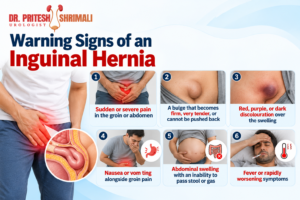
Seek emergency medical care if you experience any of the following:
- Sudden or severe pain in the groin or abdomen
- A bulge that becomes firm, very tender, or cannot be pushed back
- Red, purple, or dark discolouration over the swelling
- Nausea or vomiting alongside groin pain
- Abdominal swelling with an inability to pass stool or gas
- Fever or rapidly worsening symptoms
These warning signs may indicate a serious complication requiring urgent treatment. Do not wait for a routine appointment or attempt to force the swelling back inside. Although Inguinal Hernia Treatment in Indore can often be planned when a hernia is uncomplicated, a suspected strangulated hernia requires emergency assessment. Prompt medical attention can be critical when the blood supply to the affected tissue is at risk.
How Is an Inguinal Hernia Diagnosed?
Diagnosing an inguinal hernia usually begins with a review of symptoms and a physical examination. A clinician will ask when the swelling first appeared, whether it changes with activity, and whether you experience pain, nausea, constipation, or other symptoms.
Physical Examination
The clinician may examine the groin while you are standing and lying down. You may be asked to cough or strain gently to help reveal a small bulge. The examination can also help identify whether the swelling might have another cause.
Ultrasound Examination
An ultrasound may be recommended when the physical examination does not provide a clear answer. It uses sound waves to create images of the tissues and can help identify a hernia or other causes of groin swelling.
Additional Investigations
Further imaging or investigations may be required in selected cases, especially when symptoms are unclear or complications are suspected. The choice depends on the clinical findings. Once the diagnosis is established, the clinician can explain the next steps. Patients seeking Inguinal Hernia Treatment in Indore should ask about the benefits and limitations of monitoring, the indications for surgery, recovery expectations, and possible complications.
What Treatment Options Are Available for an Inguinal Hernia?
Treatment depends on the hernia’s size, symptoms, the patient’s health, and the risk of complications. Surgery is the only way to repair the abdominal wall defect permanently, but not every uncomplicated hernia requires immediate surgery.
Monitoring Under Medical Supervision
Some adults with a minimally symptomatic inguinal hernia may be suitable for watchful waiting after an appropriate clinical assessment. This involves monitoring symptoms and seeking reassessment if the bulge grows, discomfort develops, or other changes occur. Monitoring does not make the hernia disappear. The decision should be made with a clinician who can explain the risks and when treatment may become necessary.
Open Hernia Repair
In open surgery, the surgeon makes an incision near the groin to access the hernia. The protruding tissue is returned to its appropriate position, and the weak area is repaired. Mesh may be used to reinforce the abdominal wall, depending on the case and surgical plan.
Laparoscopic Hernia Repair
Laparoscopic surgery uses small incisions and a camera to guide the repair. It may be appropriate for selected patients, including some people with hernias on both sides or a recurrence after previous open surgery. The best approach depends on the patient’s condition, surgical history, available expertise, and clinical assessment. A Hernia Surgeon in Indore can explain which method may be suitable and discuss the expected recovery and risks.
Patients exploring Inguinal Hernia Treatment in Indore should not choose a surgical method based only on the size of the incision or claims about recovery. The decision should consider safety, suitability, and the surgeon’s recommendations.
Can an Inguinal Hernia Be Prevented From Getting Worse?
Not every inguinal hernia can be prevented, because some develop due to natural weaknesses in the abdominal wall. However, certain habits may help reduce unnecessary strain and make symptoms easier to manage.
Consider these practical measures:
- Manage constipation: Eat fibre-rich foods, drink adequate fluids, and seek advice if constipation persists.
- Address chronic coughing: Get persistent coughing assessed and treated appropriately.
- Use safe lifting techniques: Avoid lifting loads that cause pain or excessive strain.
- Maintain a healthy activity routine: Follow medical advice about suitable movement and exercise.
- Seek assessment early: Do not ignore a new groin bulge or recurring discomfort.
These steps do not repair an existing hernia. Avoid relying on exercises, abdominal belts, or home remedies as a permanent cure.
A clinician can explain whether monitoring or surgery is appropriate. If you are considering Inguinal Hernia Treatment in Indore, discuss any work-related lifting, exercise habits, and other activities that affect your symptoms.
Why Is Early Medical Evaluation Important?
Early evaluation can help distinguish an uncomplicated inguinal hernia from other causes of groin swelling and identify warning signs that need urgent attention. It also gives patients an opportunity to understand their options before symptoms interfere with daily activities.
Dr. Pritesh Shrimali provides information about inguinal hernia surgery through his Indore practice. Patients can discuss their symptoms, medical history, and concerns during a consultation to understand the next steps.
People searching for the Best Urologist in Indore may be looking for help with conditions involving the urinary tract or male reproductive system. However, an inguinal hernia is an abdominal wall condition, and surgical evaluation by a clinician with appropriate hernia-management expertise is important. Depending on the patient’s symptoms, a urologist may help assess certain urinary or scrotal conditions, but a suspected hernia should be evaluated by an appropriate surgical professional.
When exploring Inguinal Hernia Treatment in Indore, ask about the diagnosis, whether further tests are needed, available treatment options, and signs that require urgent care. Dr. Pritesh Shrimali’s practice can be contacted to discuss the services offered and whether an appointment is suitable for your concern.
Frequently Asked Questions About Inguinal Hernia Symptoms and Treatment
1. What are the first signs of an inguinal hernia?
The earliest Inguinal Hernia Symptoms may include a small bulge in the groin, heaviness, or discomfort during coughing, lifting, or standing for long periods. Some people have no pain initially. A medical examination is needed to confirm the cause.
2. Can an inguinal hernia go away on its own?
An inguinal hernia generally does not heal or disappear permanently on its own. Some uncomplicated hernias may be monitored under medical supervision, depending on symptoms and individual circumstances. Inguinal Hernia Treatment in Indore should be discussed with a suitable clinician to understand whether monitoring or repair is appropriate.
3. When should I see a Hernia Surgeon in Indore?
Consult a Hernia Surgeon in Indore if you notice a new groin bulge, recurring discomfort, or swelling that increases during activity. Sudden severe pain, vomiting, or a firm and tender bulge requires emergency medical assessment rather than a routine appointment.
4. Is every groin lump an inguinal hernia?
No. Enlarged lymph nodes, cysts, femoral hernias, and scrotal conditions can also cause groin swelling. A clinician may perform a physical examination and recommend an ultrasound when needed. Do not rely on symptoms alone to diagnose the condition.
5. Is surgery always necessary for inguinal hernia treatment?
Not every uncomplicated hernia requires immediate surgery. Some adults with minimal symptoms may be offered watchful waiting after an individual assessment. Surgery is the only definitive way to repair the defect, and treatment timing depends on symptoms, risks, and the patient’s health.
6. Which doctor should I consult for Inguinal Hernia Treatment in Indore?
For Inguinal Hernia Treatment in Indore, seek an assessment from a clinician experienced in diagnosing and managing hernias, commonly a general surgeon or hernia surgeon. Dr. Pritesh Shrimali’s website lists inguinal hernia surgery among its services. Confirm that the clinician’s expertise and proposed treatment are appropriate for your specific condition.
7. Can an inguinal hernia cause testicular swelling?
Yes. An inguinal hernia may extend into the scrotum and cause swelling. However, hydrocele, infection, and other conditions can cause similar symptoms. Sudden or severe testicular pain requires emergency medical assessment.
8. How is an inguinal hernia diagnosed?
Diagnosis usually involves a medical history and physical examination. The clinician may ask you to stand or cough during the examination. Ultrasound or other imaging may be recommended if the diagnosis is uncertain or another condition is suspected.
9. Can I exercise if I have an inguinal hernia?
The appropriate level of activity depends on your symptoms and clinical assessment. Avoid activities that cause pain or increase the bulge until you have received medical advice. Exercise does not repair an existing hernia, and heavy lifting may aggravate symptoms in some people.
10. Can I consult the Best Urologist in Indore for a groin swelling?
People searching for the Best Urologist in Indore should understand that groin swelling can have several causes. A urologist may assess certain urinary or scrotal conditions, while a suspected inguinal hernia generally needs evaluation by a clinician experienced in hernia management. The appropriate specialist depends on the examination findings.
11. Who is the best doctor for Inguinal Hernia Treatment in Indore?
If you are looking for Inguinal Hernia Treatment in Indore, consult a qualified general surgeon or hernia specialist who can assess your symptoms and explain suitable treatment options. Dr. Pritesh Shrimali is a doctor patients can contact to enquire about inguinal hernia evaluation and surgical services in Indore. The right treatment depends on your diagnosis, medical history, and individual needs.
Conclusion – Inguinal Hernia Treatment in Indore
Identifying the early warning signs of an inguinal hernia can help you seek timely medical advice. A groin bulge, discomfort during coughing or lifting, a feeling of heaviness, or swelling extending towards the scrotum should not be ignored. Although these symptoms do not always indicate a hernia, an examination can help establish the cause.
Inguinal Hernia Treatment in Indore should begin with an accurate diagnosis and an individual assessment of the available options. Some uncomplicated hernias may be monitored, while others may require surgical repair. Sudden severe pain, vomiting, or a firm, tender bulge requires emergency medical care.
Dr. Pritesh Shrimali’s practice provides information about inguinal hernia surgery in Indore. Patients can contact the clinic to discuss their concerns and clarify whether the services offered are appropriate for their condition. The priority should always be an accurate diagnosis, an informed treatment decision, and prompt attention to emergency warning signs.