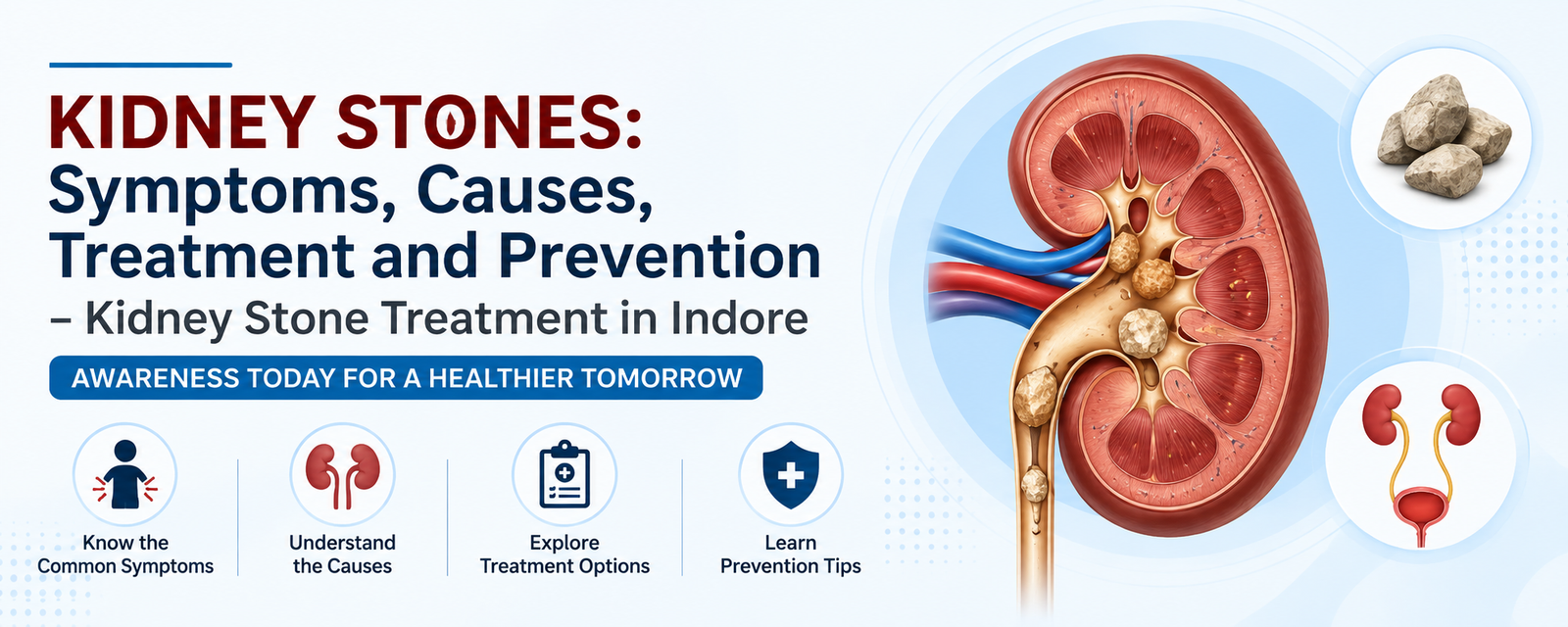
Kidney Stone Treatment in Indore are hard deposits that develop inside the kidneys when certain minerals and salts become concentrated in the urine. They can be very small and pass naturally, or they may become larger and block the urinary tract. Depending on their size and location, they can cause severe pain, blood in the urine, nausea, vomiting, and difficulty while urinating. Understanding the causes, symptoms, treatment, and prevention of stones can help people seek timely medical care. For patients experiencing recurrent or painful stones, Kidney Stone Treatment in Indore focuses on identifying the stone size, location, and underlying risk factors before selecting an appropriate treatment approach.
If you are experiencing symptoms such as severe pain in the side or back, painful urination, or blood in the urine, an evaluation by a Urologist in Indore can help determine whether a kidney stone is responsible. Dr. Pritesh Shrimali has more than 24+ years of experience in urology and manages kidney stones and various urinary tract conditions. Depending on the diagnosis, Kidney Stone Treatment in Indore may involve observation, medicines, ESWL, ureteroscopy, laser treatment, or PCNL.
Best Urologist in Indore for Kidney Stone Evaluation
Choosing an experienced Urologist in Indore is important when a kidney stone causes repeated pain, urinary obstruction, infection, or other complications. Some small stones may pass without a procedure, while larger stones may require intervention.
Dr. Pritesh Shrimali has advanced urology training from P.D. Hinduja National Hospital, Mumbai, and manages different urological conditions, including kidney stones, prostate disorders, urinary blockage, male infertility, and bladder conditions.
During a kidney stone evaluation, the doctor may consider:
- Medical history
- Physical examination
- Urine examination
- Blood tests
- Ultrasound
- CT scan when required
- Kidney function assessment
- Stone analysis when available
Kidney Stone Symptoms: Common Warning Signs
Recognizing Kidney Stone Symptoms can help patients seek medical attention before complications develop. Symptoms can vary depending on the stone’s size, location, and whether it is blocking urine flow.
Common Kidney Stone Symptoms include:
- Severe pain in the side or back
- Pain moving toward the lower abdomen or groin
- Pain during urination
- Frequent urge to urinate
- Blood in the urine
- Cloudy or foul-smelling urine
- Nausea and vomiting
- Difficulty passing urine
- Restlessness caused by pain
Some small stones may not cause noticeable symptoms. Problems may become apparent when the stone moves into the ureter.
Kidney Stone Pain: Why Does It Occur?
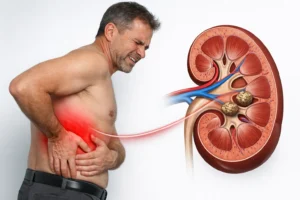
One of the most recognizable Kidney Stone Symptoms is sudden, severe pain. This commonly happens when a stone moves from the kidney into the ureter, the narrow tube connecting the kidney and bladder.
As the stone moves, it may irritate the urinary tract or interfere with urine flow. Pain may start in the side or back and radiate toward the abdomen, lower abdomen, or groin.
The intensity of pain can change over time and may occur in waves. Severe pain, particularly when accompanied by fever, chills, vomiting, or difficulty passing urine, requires prompt medical evaluation.
Kidney Stone Causes: What Increases the Risk?
Understanding Kidney Stone Causes is important because identifying risk factors can help reduce the possibility of recurrence. Stones develop when certain substances in the urine become concentrated and form crystals.
Common Kidney Stone Causes and risk factors include:
- Inadequate fluid intake
- Dehydration
- High sodium intake
- Certain dietary patterns
- Obesity
- Family history
- Certain metabolic conditions
- Recurrent urinary tract infections
- Some medications
- Conditions affecting mineral metabolism
The cause may differ between patients. People who develop stones repeatedly may require additional testing to determine why they are forming.
Dehydration as a Kidney Stone Cause
When the body does not receive enough fluid, urine becomes more concentrated. This increases the concentration of substances that can form crystals.
People who work in hot environments, sweat heavily, exercise extensively, or regularly consume insufficient fluids may have an increased risk of stone formation.
Diet-Related Kidney Stone Causes
Diet can influence the development of stones. Excessive sodium intake and certain dietary patterns may increase risk in susceptible individuals.
However, dietary recommendations should depend on the type of stone and the individual’s health. Major dietary restrictions should not be started without appropriate medical guidance.
Family History and Kidney Stone Causes
People with a family history of stones may have a greater tendency to develop them. Certain inherited conditions can also increase stone formation.
When stones repeatedly occur, a Urologist in Indore may recommend further evaluation to identify metabolic or hereditary risk factors.
Types of Kidney Stones
Different stones are made of different substances. Identifying the stone type can help guide prevention.
Calcium Kidney Stones
Calcium stones are the most common type. They may contain calcium oxalate or calcium phosphate.
Uric Acid Kidney Stones
Uric acid stones may develop when urine contains high levels of uric acid. Dietary and metabolic factors can contribute to their formation.
Struvite Kidney Stones
Struvite stones are associated with certain urinary tract infections and may grow rapidly in some cases.
Cystine Kidney Stones
Cystine stones are uncommon and occur due to an inherited condition that causes increased cystine in the urine.
Kidney Stone Diagnosis: How Are Stones Detected?
Accurate diagnosis is an important part of Kidney Stone Treatment in Indore. The doctor first reviews the patient’s symptoms and medical history before selecting appropriate investigations.
Diagnostic tests may include:
- Urine tests
- Blood tests
- Ultrasound
- X-ray when appropriate
- CT scan
- Kidney function tests
- Stone analysis
Imaging helps determine the number, size, and location of stones and can identify urinary obstruction.
Ultrasound for Kidney Stones
Ultrasound can be used to examine the kidneys and urinary tract. It may detect certain stones and can also show swelling of the kidney caused by obstruction.
CT Scan for Kidney Stones
A CT scan can provide detailed information about stone size and location and may be recommended when more precise imaging is needed.
Urine Tests for Kidney Stones
Urine testing can help identify blood, infection, and other findings that may contribute to the diagnosis. In recurrent cases, additional urine evaluation may be used to assess factors associated with stone formation.
Kidney Stone Treatment in Indore: Available Treatment Options
The appropriate Kidney Stone Treatment in Indore depends on several factors, including stone size, location, symptoms, urinary obstruction, infection, kidney function, and overall health.
Depending on the clinical situation, treatment may include:
- Observation for selected small stones
- Pain-relieving medicines
- Medicines to assist stone passage in selected cases
- ESWL
- Ureteroscopy
- Laser stone treatment
- PCNL
- Other procedures when medically indicated
There is no single treatment that works for every stone. The treatment should be selected after evaluating the individual patient’s condition.
Medicines for Small Kidney Stones
Some small stones can pass naturally. Medicines may be prescribed to control pain and other symptoms. In selected patients, medication may also help facilitate stone passage.
However, observation is not appropriate for every stone, particularly when there is significant obstruction, infection, persistent symptoms, or deterioration in kidney function.
ESWL for Kidney Stone Treatment
Extracorporeal shock wave lithotripsy, or ESWL, uses focused shock waves to break selected stones into smaller fragments.
The fragments may then pass through the urinary tract. Whether ESWL is appropriate depends on factors such as stone size, location, composition, and patient anatomy.
Ureteroscopy and Laser Kidney Stone Treatment
Ureteroscopy involves passing a small scope through the urinary tract to reach the stone. A laser may be used to break the stone into smaller fragments.
This technique can be used for suitable stones in the ureter or kidney. A temporary stent may sometimes be placed after the procedure.
PCNL for Large Kidney Stones
Percutaneous nephrolithotomy, commonly called PCNL, is a minimally invasive procedure used for selected large or complex stones.
A small access tract is created into the kidney through the skin, allowing the stone to be fragmented and removed. PCNL may be recommended when the stone burden is large or other treatment options are less suitable.
When Should You Seek Kidney Stone Treatment?
Not every stone requires immediate surgery, but certain symptoms require prompt medical assessment.
You should seek medical attention if you experience:
- Severe or persistent pain
- Fever or chills
- Repeated vomiting
- Difficulty passing urine
- Blood in the urine
- Symptoms of urinary infection
- Known kidney disease
- A single functioning kidney
A blocked urinary tract with infection can become a serious medical condition and may require urgent treatment.
Can Kidney Stones Damage the Kidneys?
Small stones that pass naturally may not cause permanent kidney damage. However, prolonged obstruction can interfere with normal urine drainage and may affect kidney function.
Repeated stones, persistent obstruction, or untreated infection can increase the risk of complications. This is why recurring symptoms should be evaluated rather than repeatedly managed without identifying the underlying cause.
An experienced Best Urologist in Indore can assess whether a stone is causing obstruction and determine whether intervention is required.
Kidney Stone Prevention: How Can Recurrence Be Reduced?
Kidney Stone Prevention becomes particularly important for people who have already experienced stones because recurrence is possible.
Important Kidney Stone Prevention measures include:
- Drink adequate fluids
- Avoid excessive salt intake
- Maintain a healthy body weight
- Follow a balanced diet
- Stay physically active
- Manage conditions associated with stone formation
- Follow stone-specific dietary recommendations
- Take preventive medicines when prescribed
- Follow up when stones repeatedly develop
Prevention should be individualized according to the stone type and underlying risk factors.
Hydration for Kidney Stone Prevention
Adequate fluid intake helps dilute urine and may reduce the concentration of substances that contribute to crystal formation.
Fluid requirements vary between individuals depending on climate, activity level, sweating, kidney function, and other health conditions.
Diet for Kidney Stone Prevention
Dietary changes should be based on the type of stone and individual risk factors. Reducing excessive sodium intake is commonly useful, while other dietary modifications may be recommended after appropriate evaluation.
People with recurrent stones should not completely remove calcium or other nutrients from their diet without medical advice.
Lifestyle Changes for Kidney Stone Prevention
Maintaining a healthy weight, staying physically active, drinking adequate fluids, and following a balanced diet can support overall urinary health.
For recurrent stones, identifying the underlying metabolic or dietary risk factor is an important part of long-term Kidney Stone Prevention.
Kidney Stone Diet: What Should You Eat and Avoid?
There is no universal diet that works for every type of stone. Dietary recommendations depend on whether the stone contains calcium, uric acid, or another substance.
A balanced diet with adequate fluid intake and controlled sodium consumption can be useful for many patients. Depending on the stone type, a doctor may recommend changes involving oxalate-containing foods, animal protein, calcium intake, or other dietary factors.
Stone analysis and metabolic evaluation can provide useful information for developing an individualized dietary plan.
When Should You Consult a Urologist in Indore?
You should consult a Urologist in Indore if you have severe flank pain, blood in the urine, repeated urinary symptoms, recurrent stones, difficulty passing urine, or symptoms associated with infection.
A urologist can determine whether the symptoms are due to a stone and whether the stone is causing obstruction or other complications.
For patients requiring Kidney Stone Treatment in Indore, Dr. Pritesh Shrimali provides evaluation based on symptoms, imaging findings, and individual clinical requirements.
Kidney Stone Treatment in Indore by Dr. Pritesh Shrimali
Dr. Pritesh Shrimali has more than 24+ years of experience in urology and manages kidney stones and other urinary tract conditions.
Patients undergoing Kidney Stone Treatment in Indore may be evaluated through appropriate imaging and laboratory investigations to determine the stone’s size, location, and clinical significance.
Treatment options may include:
- Clinical evaluation
- Urine and blood investigations
- Ultrasound or CT imaging
- Medical management
- ESWL when appropriate
- Ureteroscopy
- Laser stone treatment
- PCNL for selected large stones
- Follow-up and preventive guidance
The selected treatment depends on the patient’s individual diagnosis and clinical condition.
Why Choose Dr. Pritesh Shrimali – Best Urologist in Indore?
Dr. Pritesh Shrimali has more than 24+ years of experience in urology and has received advanced training from P.D. Hinduja National Hospital, Mumbai.
His areas of clinical expertise include:
- Kidney stones
- Minimally invasive urology
- Prostate disorders
- Urinary blockage
- Urinary tract conditions
- Male infertility
- Erectile dysfunction
- Bladder disorders
Patients with kidney stones can undergo a detailed evaluation to determine whether observation, medical management, or a minimally invasive procedure is appropriate.
Conditions Treated by Dr. Pritesh Shrimali
Apart from Kidney Stone Treatment in Indore, Dr. Pritesh Shrimali manages several urological conditions affecting men and women.
These include:
- Kidney Stones
- Prostate Diseases
- Urinary Blockage
- Male Infertility
- Urinary Tract Disorders
- Erectile Dysfunction
- Recurrent Urinary Infections
- Bladder Disorders
The appropriate treatment depends on the underlying condition, severity, diagnostic findings, and individual patient requirements.
Advanced Minimally Invasive Kidney Stone Treatment in Indore
Modern urology offers several minimally invasive approaches for treating kidney stones. Depending on the stone’s size and location, procedures such as ureteroscopy, laser treatment, ESWL, and PCNL may be considered.
These procedures can provide alternatives to traditional open surgery for suitable patients. However, the choice of procedure depends on imaging findings, stone characteristics, anatomy, and overall health.
A detailed assessment by the Best Urologist in Indore can help determine the appropriate treatment approach.
Summary: Kidney Stones Symptoms, Causes, Treatment and Prevention
Kidney stones are solid deposits that form when certain substances in concentrated urine crystallize. They may cause severe flank pain, painful urination, blood in the urine, nausea, vomiting, or difficulty passing urine.
The main Kidney Stone Causes include dehydration, excessive sodium intake, certain dietary factors, family history, metabolic conditions, urinary infections, and some medications. Treatment depends on stone size, location, symptoms, and other clinical factors.
Kidney Stone Treatment in Indore may involve observation, medicines, ESWL, ureteroscopy, laser treatment, or PCNL. Long-term Kidney Stone Prevention focuses on adequate hydration, appropriate dietary changes, healthy lifestyle habits, and management of individual risk factors.
FAQs About Kidney Stones
What are the common Kidney Stone Symptoms?
Common Kidney Stone Symptoms include severe pain in the side or back, pain spreading toward the abdomen or groin, painful urination, frequent urination, blood in the urine, nausea, and vomiting.
What are the main Kidney Stone Causes?
Common Kidney Stone Causes include dehydration, inadequate fluid intake, excessive sodium intake, certain dietary patterns, family history, metabolic conditions, urinary infections, and some medications.
Can kidney stones pass naturally?
Yes, some small stones can pass naturally through the urinary tract. Whether observation is appropriate depends on the stone’s size, location, symptoms, and the patient’s clinical condition.
What is the best Kidney Stone Treatment in Indore?
There is no single treatment suitable for every patient. Kidney Stone Treatment in Indore may include observation, medicines, ESWL, ureteroscopy, laser treatment, or PCNL depending on the stone and the patient’s condition.
Can kidney stones damage the kidneys?
A stone causing prolonged urinary obstruction can affect kidney function. The risk can be more serious when obstruction occurs along with an infection.
How can kidney stones be prevented?
Kidney Stone Prevention includes adequate hydration, limiting excessive salt intake, maintaining a healthy weight, following an appropriate diet, and addressing the specific factors responsible for recurrent stones.
When should I see a Urologist in Indore for kidney stones?
You should consult a Urologist in Indore if you have severe or recurring pain, blood in the urine, difficulty passing urine, repeated stones, fever, chills, or symptoms suggesting a urinary infection.
What is PCNL for kidney stones?
PCNL is a minimally invasive procedure used to remove selected large or complex kidney stones through a small access tract made into the kidney.
Is laser treatment used for kidney stones?
Yes. During ureteroscopy, a laser can be used to fragment suitable kidney or ureteral stones so the fragments can be removed or passed.
How does diet help with Kidney Stone Prevention?
Diet can help reduce recurrence when it is matched to the stone type. Adequate fluids and avoiding excessive sodium are commonly important, while other dietary changes depend on individual stone composition and metabolic risk factors.
Conclusion: Kidney Stones Symptoms, Causes, Treatment and Prevention
Kidney stones can range from small deposits that pass naturally to larger stones that cause severe pain, urinary obstruction, or other complications. Recognizing Kidney Stone Symptoms such as flank pain, blood in the urine, painful urination, nausea, vomiting, or difficulty passing urine can help patients seek timely evaluation.
The appropriate treatment depends on the stone’s size, location, symptoms, and individual health factors. Kidney Stone Treatment in Indore may include medical management, observation, ESWL, ureteroscopy, laser treatment, or PCNL when clinically indicated.
Long-term Kidney Stone Prevention includes adequate hydration, appropriate dietary changes, healthy lifestyle habits, and identification of factors that contribute to recurrent stone formation. If you are experiencing kidney stone symptoms or repeated urinary problems, Dr. Pritesh Shrimali, an experienced Urologist in Indore, provides evaluation and treatment based on individual clinical requirements.